The core of PCB design – problem solving
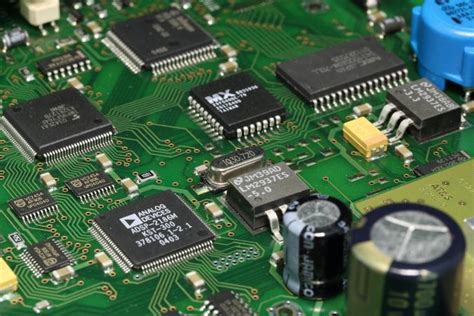
Printed circuit board (PCB) design is the process of designing schematics, laying out circuits, and producing the circuit board at the lowest possible cost. In the past, this was usually done with expensive, dedicated tools, but now, with the increasing availability of free, high-performance software tools – such as DesignSpark PCB – and design models, board designers are able to design much faster.
Although engineers know that a perfect design is the best way to avoid problems, this is still a waste of time and money, and it does not address the root cause. For example, if problems are discovered during the electromagnetic compatibility (EMC) testing phase, it will result in a lot of cost and even require the original design to be adjusted and remade, which will take months.
Challenges
Layout is the first problem that designers face. This problem depends on the content of some drawings, and some devices need to be set together for logical reasons. However, it should be noted that temperature-sensitive components, such as sensors, should be set separately from heat-generating components, including power converters. For designs with multiple power settings, 12V and 15V power converters can be placed in different locations on the board, because the heat and electronic noise they generate can affect the reliability and performance of other components and the board.
The above components also affect the electromagnetic performance of the circuit design, which is not only important for the performance and energy consumption of the board, but also has a great impact on the economics of the board.
Therefore, all board devices sold in Europe must obtain the CE mark to prove that they will not interfere with other systems.
However, this is usually only from the power supply side. There are many devices that emit noise, such as DC-DC converters and high-speed data converters. Due to defects in the board design, this noise can be captured by the channel and radiated as a small antenna, resulting in spurious noise and frequency anomalies.
The problem of far-field electromagnetic interference (EMI) can be solved by adding filters at the noise point or using metal casings to shield the signal.
However, paying full attention to the devices on the board that can release electromagnetic interference (EMI) allows the board to use cheaper casings, effectively reducing the cost of the entire system.
In the design process of the board, electromagnetic interference (EMI) is indeed a factor that must be taken seriously.
Electromagnetic crosstalk can couple with the channel, disrupting the signal into noise and affecting the overall performance of the board. If the coupled noise is too high, the signal may be completely overwhelmed, and more expensive signal amplifiers must be installed to restore normality. However, if the signal line layout can be fully considered at the beginning of the board design, the above problems can be avoided. Since the design of the board will vary according to different devices, different usage locations, different heat dissipation requirements, and different electromagnetic interference (EMI) conditions, design templates come in handy at this time.

Capacitance is also an important issue in board design that cannot be ignored because capacitance affects the propagation speed of signals and increases power consumption.
Channels can couple with adjacent lines or cross two circuit layers vertically, thus inadvertently forming a capacitor. The above problems can be relatively easily solved by reducing the length of parallel lines and adding a kink to one of the lines to cut off the coupling. However, this also requires engineers to fully consider production design principles to ensure that the design is easy to manufacture and avoid any noise radiation caused by excessive line bends. Lines can also be too close together, which can create short loops between lines, especially at bends, where metal “whiskers” can form over time. Design rule checking can often indicate areas where the risk of loops is higher than normal.
This problem is particularly prominent in the design of ground planes. A metal circuit layer can couple with all the lines above and below it.
Although this metal layer can effectively block noise, it also creates associated capacitance, which affects the speed of the line and increases power consumption.
When it comes to the design of multi-layer boards, the design of vias between different board layers is probably the most controversial issue, because vias can cause many problems in the production of boards. Vias between board layers affect signal performance and reduce the reliability of board designs, so they should be given full attention.
Solution
There are many different ways to solve various problems in the design of printed circuit boards (PCBs). These include adjustments to the design itself, such as adjusting the circuit layout to reduce noise, and methods for printed circuit board layout. Design components can be automatically installed by layout tools, but if the automatic layout can be manually adjusted, it will help improve the quality of the board design. Through this measure, the design rule detection will use the technical file to ensure that the design of the circuit board can meet the requirements of the circuit board manufacturer.
Separating different circuit board layers can reduce the associated capacitance, but this will increase the number of circuit board layers, thereby increasing costs and bringing more through-hole problems. Although the use of orthogonal power supply system and ground line design may increase the physical size of the circuit board, it can effectively play the role of the ground layer in the double-layer circuit board, reducing the capacitance and complexity of circuit board manufacturing.
Design tools including DesignSpark PCB can help engineering designers solve many problems at the beginning of the design, but engineering designers still need to have a full understanding of the design requirements of the printed circuit board (PCB).
For example, if the editor of the printed circuit board (PCB) needs to know the number of layers of the circuit board at the beginning of the design, for example, a double-layer circuit board needs a ground layer and a power layer, two independent board layers.
Component automatic layout technology is very useful and can help designers spend more time designing the layout area of the equipment.
For example, if the power supply equipment is too close to sensitive signal lines or high temperature areas, many problems will arise. Similarly, signal lines can be automatically routed while avoiding most problems, but analysis and manual manipulation of high risk areas will greatly improve the quality of printed circuit board (PCB) design, increase revenue and reduce overall costs.
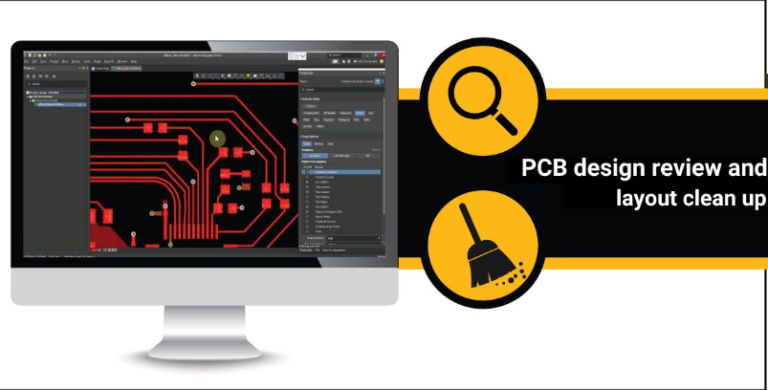
Design rule checking is also a very powerful tool, which can check the distance between lines to ensure that the distance between lines is not too close, resulting in a short loop. However, the overall design still has high economic value. Design planning checking tools can also be used to check and adjust power and ground planes to avoid large associated capacitance areas.
The above tools will also be of great help to Gerber and Excellon in terms of printing lines and boards and drilling through holes in order to produce the final design. In this way, the technical files are closely linked to the board manufacturer.
Conclusion
There are many issues to consider in the design process of printed circuit boards (PCBs), and tools such as DesignSpark PCB can effectively deal with most of them. By adopting certain best practice guidelines, engineers can effectively reduce costs and improve board reliability while meeting system specifications, deflecting system certification at a lower cost and avoiding further problems.