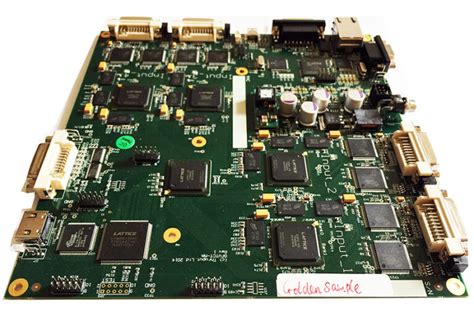
The Rise of Chinese PCB Industry: Innovation, Challenges, and Global Impact
Introduction
The Printed Circuit Board (PCB) industry serves as the backbone of modern electronics, and China has emerged as its undisputed global leader over the past two decades. From smartphones and computers to automotive systems and aerospace technology, Chinese-manufactured PCBs now power devices across every sector of the global economy. This article examines the remarkable growth trajectory of China’s PCB industry, analyzing its competitive advantages, technological advancements, challenges, and future prospects in an increasingly complex global market.
Historical Development of China’s PCB Industry
China’s journey to becoming the world’s PCB powerhouse began in the 1980s when the country first opened its doors to foreign investment in electronics manufacturing. The initial phase (1980s-1990s) saw the establishment of joint ventures between Chinese state-owned enterprises and international electronics companies, primarily from Japan, Taiwan, and Western nations. Coastal cities like Shenzhen, Guangzhou, and Shanghai became early hubs for PCB production, benefiting from special economic zone policies.
The turning point came after China’s accession to the World Trade Organization (WTO) in 2001, which accelerated the industry’s growth through increased foreign direct investment and technology transfer. Between 2000 and 2010, China’s PCB output value grew at an astonishing compound annual growth rate (CAGR) of over 20%, surpassing Japan to become the world’s largest PCB producer in 2006.
Recent years have witnessed a qualitative transformation in China’s PCB capabilities. From initially focusing on low-end, single/double-layer boards, Chinese manufacturers have progressed to master advanced technologies like high-density interconnect (HDI) PCBs, flexible circuits, and IC substrates. This evolution mirrors China’s broader transition from “world factory” to innovation-driven manufacturing powerhouse.
Current Market Position and Global Share
Today, China dominates the global PCB landscape with unparalleled production scale and comprehensive supply chain integration. Industry statistics reveal that:
- China accounts for over 50% of global PCB production value, with output exceeding $40 billion annually
- The country houses more than 1,500 PCB manufacturers, ranging from small specialty shops to massive vertically-integrated conglomerates
- Guangdong province alone produces about 40% of China’s PCBs, with the Pearl River Delta region forming the world’s most concentrated PCB manufacturing cluster
- Chinese companies now lead in market segments including consumer electronics PCBs (70% global share), automotive PCBs (45%), and communication equipment PCBs (60%)
The industry’s customer base has similarly expanded from serving primarily domestic OEMs in the 2000s to supplying virtually all major global electronics brands today. Apple, Samsung, HP, Dell, Bosch, and Tesla all rely on Chinese PCB suppliers for significant portions of their supply chains.
Key Competitive Advantages
Several structural factors underpin China’s PCB industry dominance:
1. Complete Supply Chain Ecosystem
China has developed the world’s most comprehensive PCB supply chain, with localized production of nearly all raw materials (copper clad laminates, prepregs, chemical reagents) and equipment (exposure machines, drilling machines, plating lines). This vertical integration dramatically reduces production costs and lead times compared to competitors.
2. Scale Economies and Infrastructure
Massive production clusters in the Yangtze River Delta, Pearl River Delta, and Bohai Rim regions enable unparalleled economies of scale. Supporting infrastructure—from specialized logistics providers to PCB-focused industrial parks—further enhances efficiency.
3. Engineering Talent Pool
China graduates over 1 million engineering students annually, providing a steady stream of technical talent. Many PCB companies operate dedicated R&D centers, with leading firms employing hundreds of engineers focused on process innovation and product development.
4. Government Policy Support
The Chinese government has consistently prioritized PCB development through initiatives like:
- “Made in China 2025” identifying advanced PCBs as a key strategic technology
- Tax incentives for high-tech PCB manufacturers
- Funding for domestic equipment and material R&D
- Specialized vocational training programs for PCB technicians
Technological Advancements and Innovation
Contrary to outdated perceptions of Chinese manufacturers as purely low-cost imitators, the PCB industry has made significant strides in technological innovation:
High-Density Interconnect (HDI) Technology
Chinese producers like Shennan Circuits and东山精密 have mastered advanced HDI processes enabling finer lines/spaces (down to 25μm), stacked microvias, and embedded components—critical for modern smartphones and wearables.
Flexible and Rigid-Flex PCBs
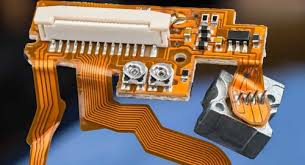
China now leads in flexible PCB production, supplying major consumer electronics brands. Innovations include ultra-thin flexible circuits (under 25μm) and sophisticated rigid-flex designs for foldable devices.
High-Frequency Materials
For 5G and radar applications, Chinese material scientists have developed domestic alternatives to PTFE-based high-frequency laminates, reducing dependence on imports.
Automated Manufacturing
Pioneering “lights-out” factories (like沪电股份’s fully automated facility) utilize AI-powered visual inspection, robotic handling, and IoT-enabled process control to achieve world-class quality standards.
IC Substrates
Although still playing catch-up with leaders like Unimicron, Chinese firms are making breakthroughs in advanced packaging substrates for domestic chipmakers.

Challenges Facing the Industry
Despite its strengths, China’s PCB sector faces several pressing challenges:
1. Environmental Compliance
PCB manufacturing involves hazardous chemicals and heavy metals. Stricter environmental regulations (especially in the Yangtze River Economic Belt) have forced hundreds of smaller producers to close or relocate. Compliance costs now represent 5-8% of revenue for medium-sized firms.
2. Labor Costs and Demographics
Average wages in China’s electronics sector have quadrupled since 2008, eroding the traditional labor cost advantage. Younger workers increasingly shun factory jobs, pushing manufacturers toward automation.
3. Geopolitical Tensions
US-China trade conflicts have led to:
- 25% tariffs on Chinese PCBs exported to America
- Restrictions on technology transfers
- Growing “de-risking” efforts by Western customers
4. Regional Competition
Southeast Asian nations (Vietnam, Thailand, Malaysia) are attracting PCB investment with lower costs and preferential trade terms to Western markets.
Adaptation Strategies
Chinese PCB companies are responding to these challenges through multiple strategies:
1. Geographical Diversification
Leading firms are establishing overseas production bases while retaining high-end manufacturing in China. Examples include:
- 深南电路 building a Thai subsidiary
- 景旺电子 acquiring Malaysian facilities
2. Product Upgrading
Moving into higher-value segments like:
- Automotive PCBs for electric/autonomous vehicles
- High-speed server PCBs for AI/data centers
- Advanced packaging substrates
3. Digital Transformation
Implementing Industry 4.0 technologies:
- Digital twin systems for process optimization
- AI-based defect detection
- Blockchain-enabled supply chain tracking
4. Sustainability Initiatives
Developing:
- Lead-free and halogen-free laminates
- Water recycling systems
- Solar-powered factories
Future Outlook
The next decade will likely see China’s PCB industry consolidate its leadership while undergoing structural transformation:
1. Technology Leadership
China is poised to lead in next-gen PCB technologies including:
- Embedded active/passive components
- 3D printed electronics
- Ultra-high density substrates for chiplet packaging
2. Domestic Market Growth
With China accounting for 40% of global electronics production, domestic demand will drive innovation in:
- EV/autonomous vehicle electronics
- 5G/6G infrastructure
- Industrial IoT equipment
3. Global Supply Chain Restructuring
Rather than wholesale relocation, expect a “China+1” model where:
- High-volume, labor-intensive production moves abroad
- Complex, technology-intensive manufacturing remains in China
- Regional supply chains develop around major markets
4. Increased R&D Investment
Annual PCB-related patent applications from China now exceed other countries combined, signaling strong momentum in materials, equipment, and process innovation.
Conclusion
China’s PCB industry has evolved from low-cost subcontractor to global technology leader through strategic investments, scale advantages, and continuous innovation. While facing legitimate challenges from environmental pressures, geopolitical tensions, and regional competition, the sector’s deep supply chain roots, engineering talent base, and adaptive capabilities position it for enduring leadership. As electronics become ever more pervasive across industries, China’s PCB manufacturers will play a pivotal role in shaping the technological and industrial landscape of the 21st century. Their ability to balance economic competitiveness with environmental responsibility and geopolitical resilience will determine not just the industry’s future, but that of global electronics innovation as a whole.