
Flex Jumper PCB: Design, Applications, and Advantages
Introduction
Printed Circuit Boards (PCBs) are the backbone of modern electronics, enabling the interconnection of components in devices ranging from smartphones to industrial machinery. Among the various types of PCBs, Flex Jumper PCBs have gained significant attention due to their unique ability to provide flexible interconnections in compact and dynamic environments.
A Flex Jumper PCB is a specialized type of flexible circuit that acts as a bridge between two rigid PCBs or other electronic components. Unlike traditional rigid PCBs, flex jumpers can bend, twist, and fold, making them ideal for applications where space constraints and movement are critical factors.
This article explores the design considerations, manufacturing processes, applications, and advantages of Flex Jumper PCBs, providing a comprehensive understanding of their role in modern electronics.
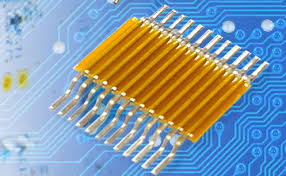
1. What is a Flex Jumper PCB?
A Flex Jumper PCB is a short, flexible printed circuit board that connects two or more rigid PCBs or electronic modules. It is designed to replace traditional wire harnesses or ribbon cables, offering better signal integrity, reduced weight, and improved reliability in high-flex environments.
Key Characteristics:
- Flexibility: Made from polyimide or other flexible substrates, allowing bending and folding.
- Lightweight: Thinner and lighter than rigid PCBs, reducing overall system weight.
- High-Density Interconnects: Supports fine-pitch traces for compact designs.
- Durability: Resistant to vibrations, shocks, and repeated bending.
2. Design Considerations for Flex Jumper PCBs
Designing a Flex Jumper PCB requires careful consideration of mechanical, electrical, and thermal factors to ensure reliability and performance.
2.1 Material Selection
- Substrate: Polyimide (PI) is the most common material due to its excellent thermal stability and flexibility.
- Conductors: Copper (typically rolled annealed copper for better flexibility).
- Adhesives: Acrylic or epoxy-based adhesives for layer bonding.
- Coverlay: A protective layer (often polyimide) to shield traces from environmental damage.
2.2 Bend Radius and Flexibility
- The minimum bend radius is critical to prevent cracking or delamination.
- Static Applications: 6x the thickness of the flex PCB.
- Dynamic Applications (repeated bending): 10x the thickness.
2.3 Trace Routing and Signal Integrity
- Avoid sharp angles in traces to reduce stress points.
- Use curved traces instead of 90-degree turns.
- Impedance control is crucial for high-speed signals.
2.4 Connector and Termination Options
- Zero Insertion Force (ZIF) connectors for easy assembly.
- Soldered connections for permanent installations.
- Pressure-sensitive adhesives (PSA) for temporary mounting.
2.5 Thermal Management
- Flexible PCBs dissipate heat differently than rigid PCBs.
- Use thermal vias or heat sinks if high-power components are involved.
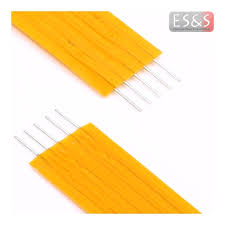
3. Manufacturing Process of Flex Jumper PCBs
The manufacturing of Flex Jumper PCBs involves several specialized steps:
3.1 Substrate Preparation
- Polyimide films are cleaned and coated with adhesive.
- Copper foil is laminated onto the substrate.
3.2 Circuit Patterning
- Photolithography is used to transfer the circuit design onto the copper layer.
- Etching removes excess copper, leaving only the desired traces.
3.3 Coverlay Application
- A protective polyimide layer is applied over the traces.
- Laser cutting or drilling creates openings for connectors and vias.
3.4 Testing and Inspection
- Automated Optical Inspection (AOI) checks for defects.
- Electrical testing ensures continuity and signal integrity.
3.5 Final Assembly
- Connectors are attached via soldering or crimping.
- The flex jumper is tested under bending conditions to verify durability.
4. Applications of Flex Jumper PCBs
Flex Jumper PCBs are widely used in industries where space, weight, and flexibility are critical.
4.1 Consumer Electronics
- Smartphones & Tablets: Connecting displays, cameras, and sensors.
- Wearable Devices: Enabling flexible circuits in smartwatches and fitness trackers.
4.2 Medical Devices
- Endoscopes & Surgical Tools: Providing flexible, high-density interconnects.
- Hearing Aids: Miniaturized and bendable circuits for compact designs.
4.3 Automotive Industry
- Dashboard Displays: Connecting infotainment systems.
- Sensor Modules: Flexible connections in ADAS (Advanced Driver Assistance Systems).
4.4 Aerospace & Defense
- Satellites & UAVs: Lightweight and vibration-resistant interconnects.
- Military Communications: Rugged flex circuits for harsh environments.
4.5 Industrial Automation
- Robotic Arms: Flexible PCBs for dynamic movements.
- IoT Devices: Enabling compact sensor networks.

5. Advantages of Flex Jumper PCBs
5.1 Space and Weight Savings
- Thinner and lighter than traditional wiring, ideal for compact devices.
5.2 Enhanced Reliability
- Fewer solder joints and connectors reduce failure points.
- Resistant to vibrations and mechanical stress.
5.3 Improved Signal Performance
- Lower impedance and crosstalk compared to ribbon cables.
- Better high-frequency signal integrity.
5.4 Cost Efficiency
- Reduces assembly time by eliminating complex wiring.
- Lower maintenance costs due to increased durability.
5.5 Design Freedom
- Can be shaped to fit unique geometries.
- Supports 3D configurations not possible with rigid PCBs.
6. Challenges and Future Trends
6.1 Challenges
- Higher initial cost compared to traditional wiring.
- Complex assembly requires specialized equipment.
- Limited repairability once damaged.
6.2 Future Trends
- Stretchable Electronics: Emerging materials for even greater flexibility.
- 3D Printed Flex Circuits: Additive manufacturing for rapid prototyping.
- Integration with Rigid-Flex PCBs: Hybrid designs for complex applications.
Conclusion
Flex Jumper PCBs represent a significant advancement in electronic interconnects, offering unparalleled flexibility, reliability, and space-saving benefits. Their applications span across consumer electronics, medical devices, automotive systems, and aerospace, making them indispensable in modern technology.
As manufacturing techniques improve and new materials are developed, Flex Jumper PCBs will continue to evolve, enabling even more innovative and compact electronic designs. Engineers and designers must carefully consider material selection, bend radius, and signal integrity to maximize the benefits of these versatile circuits.
With ongoing advancements, Flex Jumper PCBs are set to play an even greater role in the future of electronics, driving innovation in IoT, wearable tech, and beyond.