Aluminum PCB Prototyping: Optimizing Thermal Performance

Key Takeaways
When optimizing thermal performance in aluminum PCB prototyping, understanding the interplay between design and PCB manufacturing processes is critical. You’ll need to prioritize material selection—opting for high-grade aluminum cores with dielectric layers that balance thermal conductivity and electrical insulation. Working with experienced PCB manufacturing companies ensures precise fabrication of features like through-hole isolation to prevent short circuits in conductive substrates.
Tip: Always verify the dielectric layer’s thermal resistance rating during prototyping—this directly impacts heat dissipation in high-power circuits.
Managing PCB manufacturing cost involves balancing material thickness and surface finish choices. For instance, thicker aluminum substrates improve heat transfer but may increase material expenses. To avoid soldering issues, specify lead-free solder masks compatible with aluminum’s expansion properties. Testing thermal performance early—using infrared imaging or thermal cycling—helps identify hotspots before full-scale production.
If you’re scaling a PCB manufacturing business, invest in prototyping workflows that integrate thermal simulation tools. This reduces iteration cycles and ensures designs meet both performance and regulatory standards. Remember, optimizing for heat dissipation isn’t just about the board itself—it’s about aligning your design with manufacturing capabilities to achieve reliability in demanding applications.

Thermal Management in Aluminum PCB Design
Effective thermal management begins with understanding how aluminum substrates transfer heat. Unlike traditional FR-4 boards, aluminum cores use a dielectric layer to isolate circuits while channeling heat away from components. To optimize this, you must balance dielectric thickness and thermal conductivity—thinner layers improve heat transfer but risk electrical leakage.
When collaborating with PCB manufacturing companies, clarify your thermal requirements early. Many providers offer specialized metal-clad PCB (MCPCB) options tailored for high-power applications. For instance, selecting a dielectric material with ≥2.5 W/m·K conductivity significantly reduces hotspots in LED or power supply designs.
| Design Factor | Impact on Thermal Performance | Cost Consideration |
|---|---|---|
| Dielectric Thickness | Thinner = better heat transfer | Higher PCB manufacturing cost due to precision controls |
| Copper Weight | Heavier copper improves heat spreading | Adds material expenses |
| Surface Finish | HASL may impede heat dissipation | ENIG finishes increase PCB manufacturing business overhead |
Transitioning from design to prototyping? Ensure your PCB manufacturing partner performs thermal simulations to validate heat distribution patterns. This step helps identify potential short circuits caused by uneven expansion in conductive substrates. For deeper insights, review industry benchmarks for aluminum PCB performance.
Finally, prioritize component placement—group high-power devices near the board’s edges to leverage the aluminum core’s natural heat-sinking properties. Pairing this with proper via arrangements ensures consistent thermal relief without compromising electrical isolation.

Preventing Short Circuits in Conductive Substrates
When working with aluminum-based substrates, managing electrical isolation becomes critical due to the conductive nature of the metal core. PCB manufacturing processes for aluminum boards require precise control over dielectric layer thickness to prevent unintended current paths between components and the substrate. Thermal conductivity, while advantageous for heat dissipation, amplifies risks if insulation layers degrade under high temperatures.
To mitigate short circuits, prioritize dielectric materials with high breakdown voltage ratings and ensure consistent solder mask application. PCB manufacturing companies often recommend using anodized aluminum cores or ceramic-filled prepregs to enhance isolation. When designing traces, maintain adequate clearance from the substrate edge—typically 1.5x the dielectric thickness—to account for thermal expansion during operation.
Cost-effective strategies involve balancing PCB manufacturing cost with reliability. For instance, opting for laser-drilled micro-vias instead of mechanical drilling reduces stress on thin dielectric layers. Partnering with experienced PCB manufacturing business providers ensures access to advanced isolation techniques like plasma etching or oxide coating, which improve long-term performance in high-power environments.
Finally, verify isolation integrity through rigorous testing, such as high-potential (HiPot) checks, during prototyping. These steps not only prevent electrical failures but also align with broader thermal management goals by maintaining stable heat transfer pathways.
Aluminum Core PCB Material Selection Guide
When selecting materials for aluminum core PCBs, your choices directly impact thermal performance and long-term reliability. The base layer typically consists of aluminum alloys (6061 or 5052), chosen for their balance of thermal conductivity and mechanical stability. For the dielectric layer, prioritize materials with high thermal transfer rates—such as polyimide or epoxy-based substrates—to ensure efficient heat dissipation while maintaining electrical insulation.
Collaborating with experienced PCB manufacturing companies ensures access to specialized materials that meet high-power application demands. For instance, thicker dielectric layers reduce the risk of short circuits in conductive substrates, but they may increase PCB manufacturing cost. To optimize budgets, evaluate trade-offs between material thickness, thermal resistance, and application-specific requirements.
In high-volume PCB manufacturing business scenarios, standardized aluminum cores (e.g., 1.5mm thickness) often lower costs, while custom alloys cater to niche thermal or mechanical needs. Always verify material certifications—like UL flammability ratings—to guarantee compliance with safety standards. By aligning material properties with your design goals, you create prototypes that withstand thermal stress without compromising electrical integrity.

Optimizing Heat Dissipation for High-Power Circuits
When designing aluminum PCBs for high-power applications, managing heat dissipation directly impacts reliability and performance. Start by evaluating your thermal via placement and copper layer thickness—these elements determine how efficiently heat transfers from components to the aluminum core. For circuits handling 100W or more, thermal interface materials (TIMs) like ceramic-filled epoxy can bridge gaps between heat sources and the substrate, reducing hotspots.
Collaborate with PCB manufacturing companies to balance dielectric layer properties and PCB manufacturing cost. Thinner dielectric layers improve heat transfer but require tighter tolerances, which may affect production yields. Use simulation tools to model heat distribution before prototyping, ensuring your design aligns with both thermal goals and PCB manufacturing business constraints.
To prevent performance degradation, avoid clustering high-power components in areas with limited airflow. Instead, distribute them evenly across the board and maintain adequate trace spacing to minimize cross-conduction risks. When selecting finishes, opt for HASL (Hot Air Solder Leveling) or ENIG (Electroless Nickel Immersion Gold) to enhance solder joint durability under thermal stress.
Finally, monitor thermal resistance values during testing. Partnering with manufacturers experienced in PCB manufacturing for high-power systems ensures your prototypes meet real-world thermal demands without exceeding budget thresholds.

Through-Hole Isolation Techniques for Metal PCBs
When working with aluminum PCBs, managing electrical isolation in conductive substrates is critical to prevent short circuits. Through-hole isolation techniques ensure components and traces remain electrically separated from the metal core, which is essential for maintaining signal integrity in high-power applications. For PCB manufacturing companies, selecting the right method involves balancing PCB manufacturing cost with reliability.
Common approaches include using non-conductive fillers like epoxy resins or ceramic-based coatings to insulate plated through-holes (PTHs). These materials create a barrier between the conductive aluminum layer and copper traces, minimizing thermal stress during operation. Advanced PCB manufacturing processes may employ laser-drilled microvias paired with specialized dielectric layers, though this can increase PCB manufacturing business overhead.
To optimize thermal performance without compromising isolation, ensure drilled holes maintain consistent wall thickness and avoid air gaps during filling. Testing isolation resistance post-fabrication helps identify potential weak points early. For prototypes, collaborating with experienced PCB manufacturing partners ensures cost-effective solutions that meet both electrical and thermal demands. This approach becomes particularly critical when scaling production, as design flaws in isolation can lead to costly rework or field failures.
Soldering Challenges on Aluminum-Based Boards
When working with aluminum-based PCBs, you face unique soldering challenges due to the substrate’s high thermal conductivity. While this property enhances heat dissipation, it can cause uneven heating during assembly, leading to cold joints or component misalignment. To mitigate these issues, pcb manufacturing companies often recommend using specialized soldering alloys with higher melting points or applying preheating techniques to balance heat distribution across the board.
Another critical consideration is the thermal expansion coefficient mismatch between aluminum and traditional FR-4 materials. This disparity can induce mechanical stress on solder joints, particularly in high-power applications. Experienced pcb manufacturing teams address this by incorporating thermally conductive adhesives or designing solder masks that accommodate expansion differences.
Cost optimization also plays a role—pcb manufacturing cost increases when dealing with aluminum cores due to stricter process controls. However, partnering with a pcb manufacturing business that specializes in metal-clad boards ensures proper surface treatments (like oxidation-resistant coatings) are applied, reducing long-term failure risks. Always verify that your prototype’s solder profile aligns with the aluminum substrate’s thermal properties to maintain joint integrity and circuit reliability.
Prototyping Best Practices for MCPCB Applications
When developing MCPCB prototypes, prioritize thermal pathway optimization and electrical isolation from the initial design phase. Start by selecting dielectric materials with a thermal conductivity rating above 2.0 W/mK to ensure efficient heat transfer from components to the aluminum substrate. Work with pcb manufacturing companies experienced in metal-core designs to avoid delamination risks during lamination—a common issue that increases pcb manufacturing cost due to rework.
For high-current traces, maintain a minimum 8mm clearance from the board edges to prevent short circuits in the conductive substrate. Use laser-drilled vias with annular rings larger than 0.3mm to enhance mechanical stability during thermal cycling. When evaluating pcb manufacturing business partners, verify their capability to handle direct-bonded copper (DBC) processes, which improve heat dissipation in power electronics.
Always prototype with thermally conductive solder masks to reduce hot spots, and request a pcb manufacturing sample batch to test real-world performance. This step helps identify potential warping issues caused by mismatched coefficients of thermal expansion (CTE) between layers. By aligning your design choices with manufacturing realities early, you’ll streamline production scaling while maintaining thermal reliability.
Testing Thermal Performance in PCB Prototypes
When evaluating thermal performance in aluminum PCB prototypes, you’ll need to simulate real-world operating conditions to identify potential hotspots. Start by using infrared (IR) thermography to map temperature distribution across the board during high-power operation. This data helps refine heat dissipation pathways, such as adjusting the placement of thermal vias or optimizing the copper layer thickness. For accurate results, combine static thermal analysis with dynamic load testing to mimic fluctuating power demands.
Partnering with experienced PCB manufacturing companies ensures access to advanced testing equipment like thermal chambers or thermal impedance analyzers. These tools validate whether your design meets the required thermal resistance thresholds, which directly impacts PCB manufacturing cost and long-term reliability. For instance, inadequate heat management might force costly redesigns post-prototyping, affecting timelines in the PCB manufacturing business.
Always correlate test results with material specifications—especially the dielectric layer’s thermal conductivity and the aluminum core’s purity. Minor deviations here can lead to significant performance gaps. By integrating these insights early, you streamline transitions from prototyping to mass production while avoiding compromises in high-power applications.
Remember: consistent thermal testing isn’t just about preventing failures—it’s about ensuring your design aligns with both technical requirements and economic realities of PCB manufacturing.
Conclusion
When finalizing your aluminum PCB manufacturing process, prioritize thermal optimization strategies that align with your application’s power requirements. Partnering with experienced PCB manufacturing companies ensures access to advanced isolation technologies and material expertise, critical for balancing PCB manufacturing cost with performance demands. While designing, remember that thermal vias and dielectric layer thickness directly influence heat dissipation efficiency—factors that become non-negotiable in high-power scenarios.
For businesses scaling their PCB manufacturing business, prototyping serves as the proving ground for validating thermal management systems. Rigorous testing of copper-clad aluminum substrates and solder joint integrity helps preempt failures in field conditions. By integrating these insights early, you reduce rework cycles and position your designs for seamless transition to mass production. Ultimately, the success of aluminum PCB projects hinges on harmonizing technical precision with economic viability—a balance achievable through methodical prototyping and supplier collaboration.
FAQs
How does thermal management differ in aluminum PCBs compared to standard FR4 boards?
Aluminum PCBs use a conductive metal core to transfer heat away from components, unlike FR4 boards that rely on slower thermal diffusion. This makes them ideal for high-power applications where heat dissipation is critical.
What design factors increase pcb manufacturing cost for aluminum substrates?
Costs rise with specialized materials like dielectric layers and custom through-hole isolation techniques. Partnering with experienced pcb manufacturing companies ensures cost-effective solutions without compromising thermal performance.
Can aluminum PCBs prevent short circuits in high-voltage designs?
Yes, proper isolation trenches and non-conductive coatings minimize risks. Reputable pcb manufacturing providers use laser-cut grooves and precision routing to maintain electrical safety in conductive substrates.
How do you choose the right pcb manufacturing business for prototyping?
Look for suppliers with expertise in metal-core pcb manufacturing, thermal testing capabilities, and rapid prototyping workflows. Verify their ability to handle thermal interface materials and complex layer stacking.
What reduces pcb manufacturing cost for small-batch aluminum prototypes?
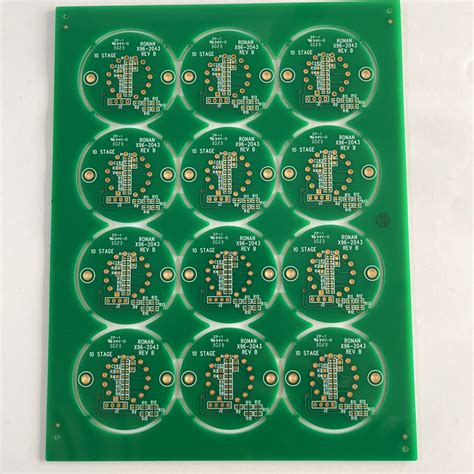
Optimize panelization to minimize material waste and select standardized core thicknesses. Many pcb manufacturing companies offer tiered pricing for prototype quantities.
Ready to Start Your Aluminum PCB Project?
For tailored solutions in thermal-optimized pcbs, please click here to connect with experts specializing in high-performance pcb manufacturing.