Design Essentials and Reliability Standards for Rigid Flex PCBs in Medical Devices
Rigid flex PCB for medical devices represents the critical intersection of mechanical flexibility and electronic reliability in modern healthcare technology….

Rigid flex PCB for medical devices represents the critical intersection of mechanical flexibility and electronic reliability in modern healthcare technology….
Meta Description: Discover why rigid-flex PCB technology is revolutionizing automotive electronic control modules. Learn about reliability improvements, space optimization, and…
Quick Answer Aerospace PCB for radar systems must utilize rigid-flex technology because it eliminates interconnect failures, reduces weight by 40%,…
HDI PCB (High Density Interconnect Printed Circuit Board) technology represents the most significant advancement in modern electronics manufacturing. As devices…
Turnkey PCB Assembly service is an end-to-end manufacturing solution where a single provider manages the entire production process—from component sourcing and…
Selecting the optimal substrate material for your high-power electronics project can mean the difference between product success and catastrophic failure….
When your electronic project generates significant heat, choosing the right substrate becomes a critical engineering decision. Aluminum PCB vs Copper…
As modern electronic systems push the boundaries of performance, 50-layer FR-4 PCB design has become the backbone of cutting-edge applications…
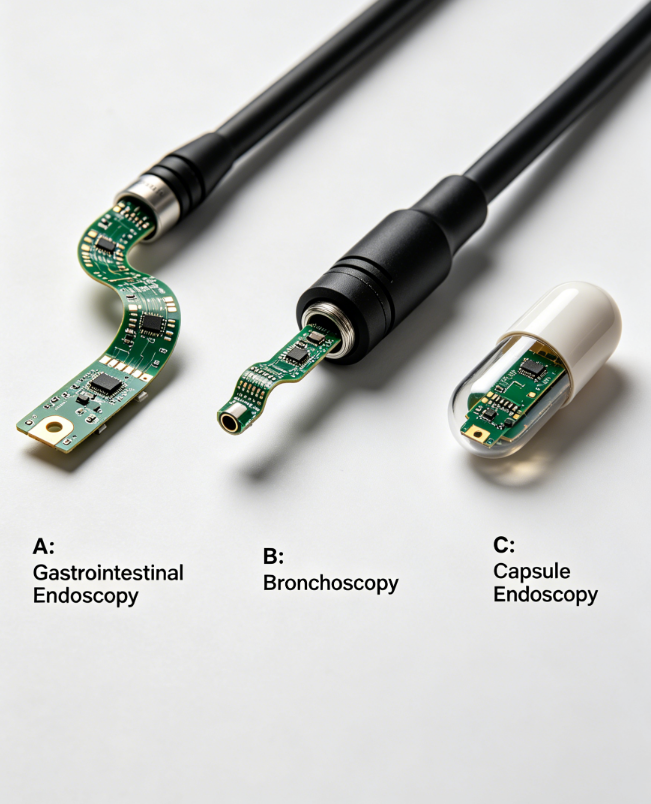
The global medical endoscopy market is projected to reach $45.3 billion by 2028, driven by the increasing demand for minimally…
Medical Device Rigid-Flex PCB technology has revolutionized modern healthcare electronics by enabling compact, reliable interconnections that withstand the rigorous demands…
Introduction: The Evolution of Circuit Density The relentless march toward miniaturization in electronics manufacturing has created an unprecedented demand for…
The global HDI PCB market surpassed $14 billion in 2023 and is projected to grow at roughly 7% CAGR through…