How to divide large current and small current on PCB board
In electronic circuit design, PCB (printed circuit board) is a key part to realize the function of electronic equipment. In the process of PCB design, the distribution of current is a very important issue.
1.The concept of current
Current refers to the amount of charge passing through the cross section of a conductor per unit time, usually in amperes (A). In the circuit, current can be divided into direct current and alternating current. Direct current refers to current with a constant direction, while alternating current refers to current with a periodic change in direction.
2.Classification of current on PCB board
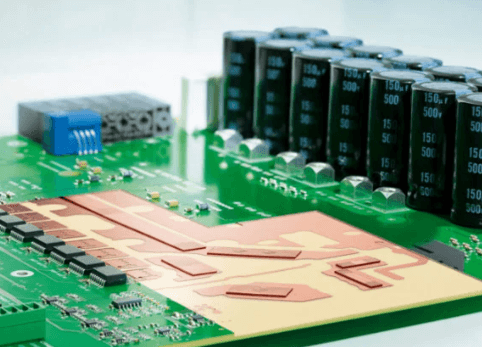
On PCB board, current can be divided into large current and small current. Large current usually refers to circuits with large current values, such as power supply circuits, motor drive circuits, etc. Small current usually refers to circuits with small current values, such as signal processing circuits, microcontroller circuits, etc.
3.Characteristics of large current and small current
Characteristics of large current
(1) Large current value: The current value of large current circuits is usually between a few amperes and tens of amperes.
(2) High power consumption: Due to the large current value, the power consumption of large current circuits is also correspondingly high.
(3) High heat generation: High current circuits generate high heat during operation, and heat dissipation measures need to be taken.
(4) Strong electromagnetic interference: High current circuits generate strong electromagnetic interference during operation, which may affect other circuits.
Characteristics of small current
(1) Small current value: The current value of a small current circuit is usually between a few milliamperes and tens of milliamperes.
(2) Low power consumption: Due to the small current value, the power consumption of a small current circuit is relatively low.
(3) Low heat generation: The heat generated by a small current circuit during operation is small, and the heat dissipation requirements are relatively low.
(4) Weak electromagnetic interference: The electromagnetic interference generated by a small current circuit during operation is weak, and the impact on other circuits is small.
4. Principles of distribution of large and small currents
Principles of power distribution
(1) Power distribution should follow the principle of “from large to small”, that is, the power supply of the large current circuit should be distributed first, and then the power supply of the small current circuit should be distributed.
(2) Power distribution should be as close to the load as possible to reduce the length of the power line, reduce resistance and voltage drop.
(3) The power distribution should consider the stability and ripple requirements of the power supply to ensure the normal operation of the circuit.
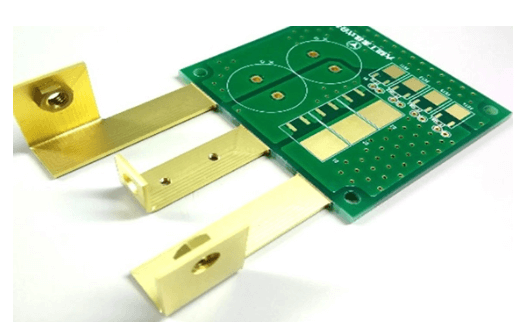
Ground wire distribution principle
(1) Ground wire distribution should follow the principle of “from small to large”, that is, the ground wire of the small current circuit should be distributed first, and then the ground wire of the large current circuit should be distributed.
(2) The ground wire distribution should be as short and thick as possible to reduce the ground wire resistance and reduce the ground wire noise.
(3) The ground wire distribution should consider the impact of the ground wire loop to avoid the generation of a large ground wire loop.
Signal line distribution principle
(1) Signal line distribution should follow the principle of “from high to low”, that is, high-speed signal lines should be distributed first, and then low-speed signal lines.
(2) Signal line distribution should try to avoid parallel with high-current lines to reduce electromagnetic interference.
(3) Signal line distribution should consider the transmission characteristics of the signal line, such as impedance matching, transmission delay, etc.
5.Wiring methods for large and small currents
Wiring methods for large currents
(1) Choose the appropriate wire width: For large current wiring, a wider wire should be selected to reduce resistance and voltage drop.
(2) Use multiple parallel wires: For larger currents, multiple parallel wires can be used to reduce the current density of a single wire.
(3) Use star wiring: For large current circuits with multiple loads, star wiring can be used to reduce wire length and resistance.
(4) Consider heat dissipation: For large current wiring, heat dissipation should be considered, such as using heat sinks, fans and other heat dissipation measures.
Wiring methods for small currents
(1) Choose the appropriate wire width: For small current wiring, narrower wires can be selected to save PCB space.
(2) Use serpentine wiring: For small current signal lines, serpentine wiring can be used to reduce the interference of signal lines to other signal lines.
(3) Avoid parallelism with large current lines: Small current signal lines should try to avoid parallelism with large current lines to reduce electromagnetic interference.
(4) Consider signal integrity: The routing of small current signal lines should consider signal integrity, such as impedance matching, transmission delay, etc.
6.PCB layout methods for large and small currents
Large current layout method
(1) Place the high current circuit in the center of the PCB to reduce the length of the power line and ground line.
(2) Separate the high current circuit from other circuits to reduce electromagnetic interference.
(3) Place the power and ground lines of the high current circuit at the edge of the PCB to facilitate heat dissipation.
(4) Consider heat dissipation issues, such as setting heat dissipation holes and heat sinks near the high current circuit.