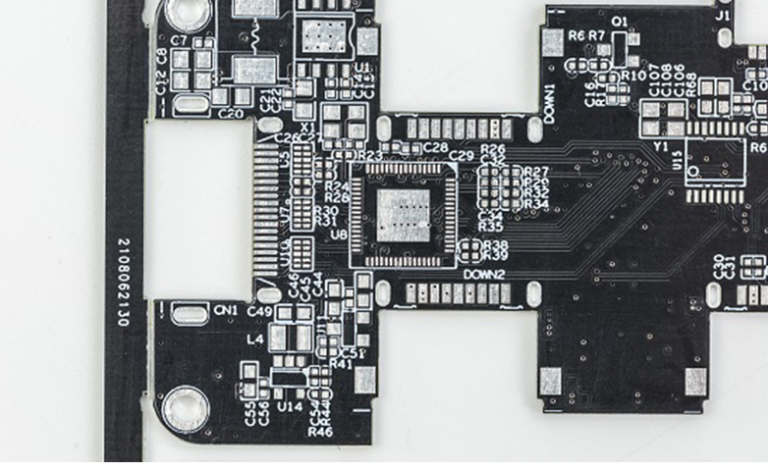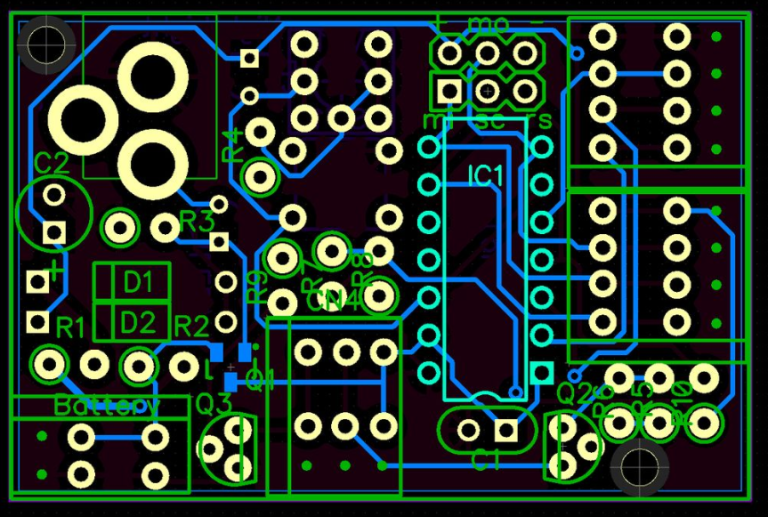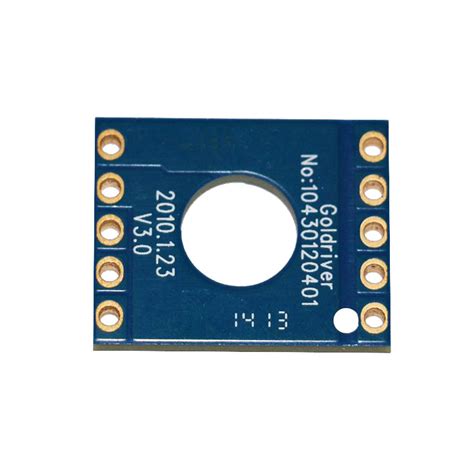
Introduction to PCB double-sided reflow process (SMT)
Let us first introduce the common holes in the PCB: through holes, blind holes, buried holes. The meaning and characteristics of these three holes.
Via (VIA), a common hole used to turn on or connect copper foil traces between conductive patterns in different layers of a board. For example (such as blind holes, buried holes), but can not be inserted into the component legs or other copper-plated holes for reinforcement. Because the PCB is formed by stacking many copper foil layers, each layer of copper foil is covered with an insulating layer so that the copper foil layers cannot communicate with each other, and the signal is linked by the via holes. (via), so there is a Chinese pass hole.
The characteristic is: in order to meet the customer’s demand
the through hole of the circuit board must be plugged, so that in the process of changing the traditional aluminum plug hole, the white plate is used to complete the surface resistance welding and plugging of the circuit board, so that the production is stable. The quality is reliable and the application is more perfect.
The via holes mainly play the role of circuit interconnection and conduction.
With the rapid development of the electronics industry, higher requirements are also placed on the manufacturing process and surface mount technology of printed circuit boards. The process of the via hole for the plug hole is applied, and the following requirements should be met: 1. There is copper in the via hole, and the solder resist plug can be plugged. 2. There must be tin-lead in the via hole. There is a certain thickness requirement (4um). There must be no solder-proof ink in the hole, resulting in hidden tin beads in the hole. 3. The via hole must have a solder-proof ink plug hole, which is opaque, and must not have tin ring, solder ball and leveling requirements.
Blind hole: the outermost circuit in the PCB is connected to the adjacent inner layer by electroplating holes. Because it is not visible, it is called blind pass. At the same time, in order to increase the space utilization between PCB circuit layers, blind holes are applied. That is, a via hole to one surface of the printed board.
Features: The blind holes are located on the top and bottom surfaces of the board and have a certain depth for the link between the surface line and the underlying inner line. The depth of the hole usually does not exceed a certain ratio (aperture). This type of production requires special attention to the depth of the hole (Z-axis) to be just right. If you do not pay attention, it will cause difficulty in plating in the hole, so it is almost useless. You can also use the circuit layer that needs to be connected in advance when it is in the individual circuit layers. Drill the holes first, and finally glue them together, but you need a more precise positioning and alignment device.
Buried holes are links between any circuit layers inside the PCB but are not conducted to the outer layer, and are also meanings of via holes that do not extend to the surface of the board.
Features: In this process, it is impossible to use the method of drilling after bonding. It is necessary to perform drilling at the time of individual circuit layers. After the partial bonding of the inner layer, the first plating is performed first, and finally the bonding is completed, which is more than the original conduction. Holes and blind holes take more time, so the price is also the most expensive. This process is usually only used on high-density boards to increase the usable space of other circuit layers.
Drilling is very important in the PCB production process and should not be sloppy.
Because the drilling is to drill the required vias on the copper clad plate to provide electrical connections and to fix the function of the device. If the operation is not proper, there is a problem in the process of the via hole, the device cannot be fixed on the circuit board, and the light influences the use, and the entire board is scrapped, so the drilling process is quite important
Several ways of classifying PCB
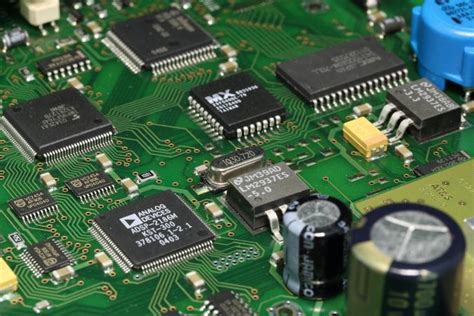
With the rapid development of 3C products and the electronicization of traditional home appliances, the application range of printed circuit boards is becoming more and more extensive. Printed circuit board is generally referred to as PCB (PrintedCircuitBoard) or PWB (Printedwireboard). It is the basic component in the electronics industry. It is used in 3C products such as electronic watches, mobile phones, computers, etc., even in military weapons. Traces of PCBs can be seen on communication equipment and space shuttles.
Multi-layer board increases wiring area, soft board breaks space limitation
At present, there are two main ways to classify PCBs:
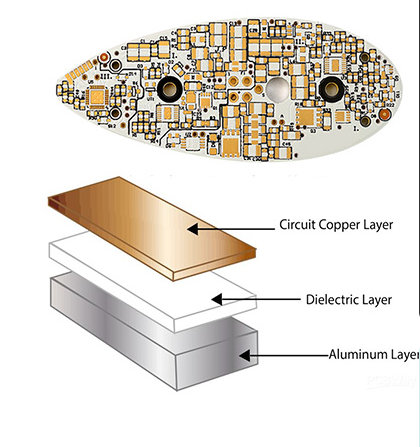
one is based on the number of layers, and the other is classified according to its hardness. According to the number of layers, the PCB can be divided into single-panel, double-panel and multi-layer boards. Generally, the multi-layer boards are mostly 4 or 6 layers, and complex can even be up to several tens of layers.
A single panel is the most basic PCB.
As the name implies, the wires are concentrated on one side, while the parts are on the other side (but the patch parts are on the same side as the wires). Because the single panel is limited in design, most of them are only Can be used for simple wiring, early electronic products or electronic products that have traditionally changed less often use single panels.
In the double panel, there are wires on the upper and lower layers, and the through holes are passed through to connect the upper and lower wires to each other. Therefore, the double-panel of the same size can double the wire design area of the single-panel, and can solve the problem of more electromagnetic interference caused by the staggered wires in the single-panel, so it is suitable for more complicated circuit design.
The multi-layer board combines single and double panels to increase the wiring area.
It is usually the most common to use two double-layer boards as the inner board, and then two single-layer boards are used on the outside, and then a four-layer multi-layer board is formed by a combination of a positioning system and an insulating bonding material.
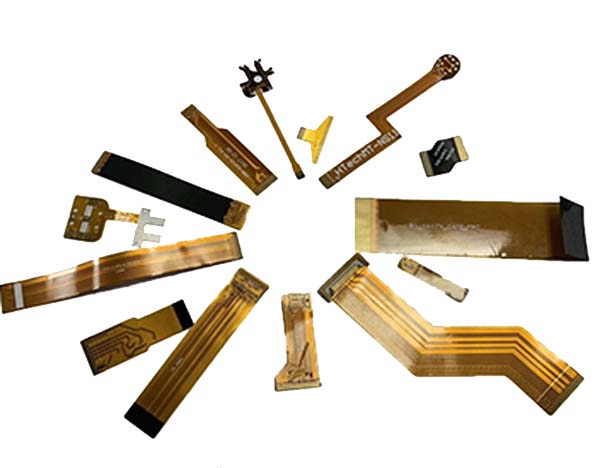
In addition, according to the soft hardness classification, it can be divided into a rigid circuit board, a flexible circuit board, and a soft and hard combination board. The thickness of rigid boards typically ranges from 0.2 mm up to 2.0 mm, while flexible boards typically have a thickness of 0.2 mm and are then thickened where soldering is required. The emergence of flexible circuit boards is mainly due to the limited space of the mechanism, so the use of a bendable PCB is required to achieve space requirements. The material of the flexible circuit board is mostly a material such as a polyester film, a polyimide film, and a fluorinated ethylene propylene film.