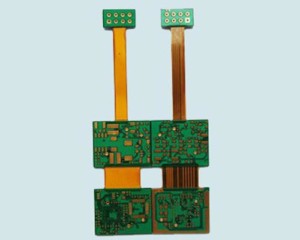
Rigid flex pcb layers
where is the rigid flex pcb layers used?
Rigid-flex PCBs are used in a variety of applications where space is limited, and flexibility is required. Some common applications include:
1. Aerospace and Defense:
Rigid-flex PCBs are used in aerospace and defense applications where reliability and durability are critical.
2. Medical Devices:
Rigid-flex PCBs are used in medical devices such as pacemakers, defibrillators, and implantable devices.
3. Consumer Electronics:
Rigid-flex PCBs are used in smartphones, tablets, and other portable devices where space is limited.
4. Automotive:
Rigid-flex PCBs are used in automotive applications such as airbag systems, engine control units, and dashboard electronics.
5. Industrial Control Systems:
Rigid-flex PCBs are used in industrial control systems such as robotics, automation, and process control.
Overall, rigid-flex PCBs are used in applications where the combination of rigid and flexible materials provides unique benefits such as reduced space requirements, increased reliability, and improved durability.
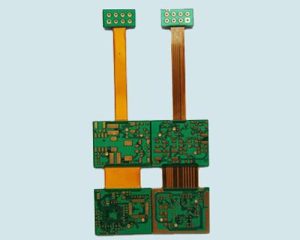
rigid flex pcb baking
1. Improved reliability:
Baking rigid flex PCBs can help to improve their reliability by removing any moisture that may have accumulated during the manufacturing process.
This can help to prevent issues such as delamination or cracking.
2. Increased flexibility:
Baking can also help to increase the flexibility of the PCB,
making it easier to bend and fold without causing damage.
3. Enhanced performance:
By removing any moisture that may have accumulated,
baking can help to improve the performance of the PCB by reducing the risk of signal loss or interference.
4. Cost savings:
Baking can help to reduce the risk of PCB failure, which can result in costly repairs or replacements.
By improving the reliability of the PCB, baking can help to save money in the long run.
5. Faster production times:
Baking can help to speed up the production process by ensuring that the PCB is fully cured and ready for use.
This can help to reduce lead times and improve overall efficiency.
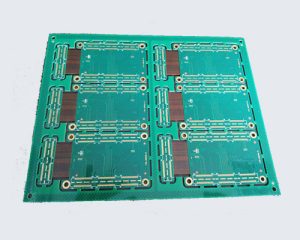
rigid flex pcb thickness
The thickness of rigid flex PCBs depends on the specific design requirements and application.
Generally, the thickness of the rigid flex PCB ranges from 0.2mm to 3.2mm.
The thickness of the rigid part of the PCB can vary from 0.4mm to 3.2mm, while the thickness of the flexible part can range from 0.1mm to 0.3mm.
The thickness of the copper layers can also vary depending on the application and design requirements.
The thickness of the solder mask and silkscreen layers can also vary depending on the specific design requirements.
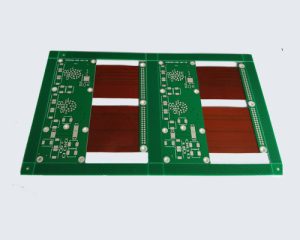
how to calculate rigid flex pcb thickness
The calculation of the rigid flex PCB thickness depends on the specific design requirements and application.
Here are the steps to calculate the thickness of a rigid flex PCB:
1. Determine the thickness of the rigid part of the PCB.
This can be calculated by adding the thickness of all the rigid layers,
including the copper layers, substrate layers, and any additional layers such as solder mask and silkscreen layers.
2. Determine the thickness of the flexible part of the PCB.
This can be calculated by adding the thickness of all the flexible layers,
including the copper layers, substrate layers, and any additional layers such as solder mask and silkscreen layers.
3. Add the thickness of the rigid part and the flexible part to get the total thickness of the rigid flex PCB.
4. Consider any additional factors that may affect the thickness,
such as the thickness of the components that will be mounted on the PCB,
the requirements for bending or folding the flexible part of the PCB, and any other design requirements.
5. Consult with the manufacturer or a PCB design expert to ensure that the calculated thickness is appropriate for the specific application and design requirements.